Loading...
Searching...
No Matches
HashErrors Class Reference
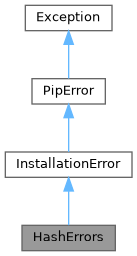
Inheritance diagram for HashErrors:
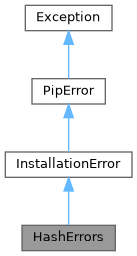
Collaboration diagram for HashErrors:
Public Member Functions | |
| None | __init__ (self) |
| None | append (self, "HashError" error) |
| str | __str__ (self) |
| bool | __bool__ (self) |
Data Fields | |
| errors | |
| head | |
Detailed Description
Multiple HashError instances rolled into one for reporting
Definition at line 424 of file exceptions.py.
Constructor & Destructor Documentation
◆ __init__()
| None __init__ | ( | self | ) |
Definition at line 427 of file exceptions.py.
427 def __init__(self) -> None:
428 self.errors: List["HashError"] = []
429
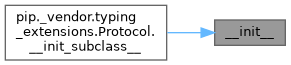
Referenced by Protocol.__init_subclass__().
Here is the caller graph for this function:
Member Function Documentation
◆ __bool__()
| bool __bool__ | ( | self | ) |
Definition at line 443 of file exceptions.py.
443 def __bool__(self) -> bool:
444 return bool(self.errors)
445
446
◆ __str__()
| str __str__ | ( | self | ) |
Definition at line 433 of file exceptions.py.
433 def __str__(self) -> str:
434 lines = []
437 lines.append(cls.head)
439 if lines:
440 return "\n".join(lines)
441 return ""
442
◆ append()
| None append | ( | self, | |
| "HashError" | error | ||
| ) |
Definition at line 430 of file exceptions.py.
430 def append(self, error: "HashError") -> None:
431 self.errors.append(error)
432
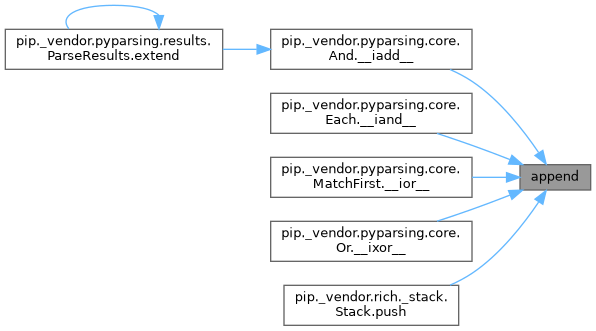
Referenced by And.__iadd__(), Each.__iand__(), MatchFirst.__ior__(), Or.__ixor__(), and Stack.push().
Here is the caller graph for this function:
Field Documentation
◆ errors
| errors |
Definition at line 436 of file exceptions.py.
Referenced by SimpleScrapingLocator._fetch(), PyPIJSONLocator._get_project(), and Locator.get_errors().
◆ head
| head |
Definition at line 437 of file exceptions.py.
The documentation for this class was generated from the following file:
- /home/liwuen/projects_dev/pqc-engineering-ssec-23/venv/lib/python3.12/site-packages/pip/_internal/exceptions.py